
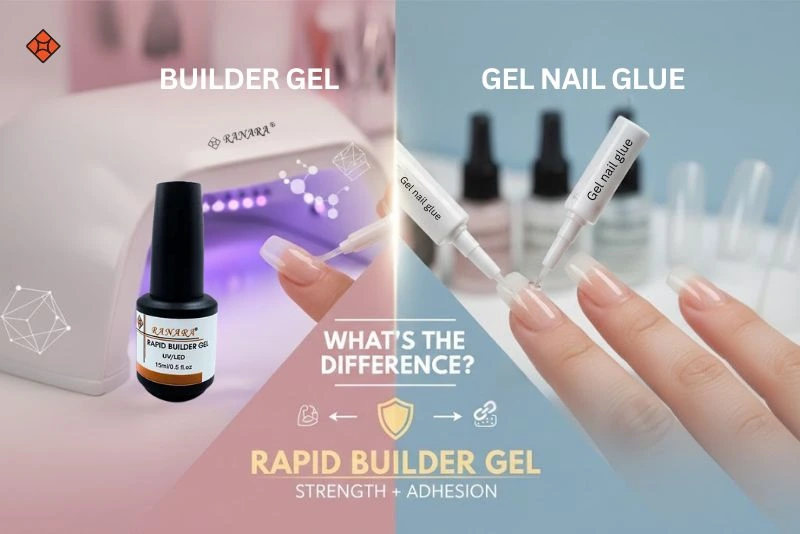
If you’re confused between builder gel and gel nail glue, you’re not alone. Many beginners (and even nail pros) mix these products because both come in gel form and cure under a UV/LED lamp.
But here’s the simple truth:
- Builder gel is made to build strength and structure
- Gel nail glue is made to bond nail tips or press-ons
And if you want a stronger option that combines both benefits, Rapid Builder Gel (BIAB-style) is often used as a professional alternative for better adhesion and longer structure hold.
In this guide, you’ll learn the key differences between builder gel vs gel nail glue, when to use each, and what’s best for long-lasting, salon-style nails.
Quick Answer: Builder Gel vs Gel Nail Glue
Builder gel is used to strengthen natural nails and build structure for overlays or extensions, while gel nail glue is mainly used to attach nail tips or press-on nails. Builder gel is thicker and stronger for long wear, while gel nail glue is adhesive-based for bonding.
Builder Gel vs Gel Nail Glue: Main Difference
The easiest way to understand it:
Builder Gel = Strength + Shape + Structure
Gel Nail Glue = Bonding + Attaching Tips
Both cure under a UV/LED lamp, but the results are very different depending on your nail goal.
What Builder Gel Does
Builder gel is designed to:
- strengthen weak or thin nails
- create a structured overlay
- build an apex for support
- help prevent cracking and breakage
- improve retention for long wear (often 2–5 weeks)
It’s commonly used for structured manicures and strong nail enhancements that look clean and professional.
What Gel Nail Glue Does
Gel nail glue is designed to:
- attach nail tips securely
- bond soft gel tips / full cover tips
- help apply press-on nails
- create quick extension results
It works like a gel-based adhesive that bonds one surface to another.
Important: Some brands sell gel glue, but many professional nail setups prefer using stronger structured products instead of relying only on adhesive gels.
What is Builder Gel?
Builder gel is a thick gel product used to build strength, thickness, and structure over natural nails. It is stronger than standard gel polish and cures into a solid, durable layer.
Builder Gel Meaning
Builder gel is a nail enhancement product that helps create a stronger nail base by adding support and structure to the natural nail.
Types of Builder Gel
Different builder gel formulas are available, such as
1) Hard Builder Gel
- very strong and durable
- best for long extensions and heavy wear
- typically removed by filing
2) Soft Builder Gel
- slightly flexible
- can be more comfortable on natural nails
- removal depends on formula (some soak-off)
3) BIAB (Builder Gel in a Bottle)
- beginner-friendly application
- ideal for overlays and natural nail strengthening
- popular in salons for structured manicures
Best Uses of Builder Gel
Builder gel is perfect for:
- strengthening weak nails
- natural nail overlays
- repairing broken corners
- building extensions using forms
- creating a smooth, structured base before gel polish
Who Should Use Builder Gel?
Builder gel is ideal for:
- nail technicians and salon professionals
- beginners who want long-lasting natural nails
- anyone who wants strong retention and durability
Rapid Builder Gel vs Gel Nail Glue
Many people search “glue gel” when their real goal is:
- strong bonding
- fast application
- long-lasting hold
- durable structure
That’s where Rapid Builder Gel becomes a smarter choice.
What is Rapid Builder Gel?
Rapid Builder Gel is a faster, smoother builder gel formula that:
- self-levels quickly
- saves time during application
- builds structure with fewer strokes
- supports overlays and extensions
- holds shape better for long wear
Why Rapid Builder Gel Can Replace Gel Nail Glue in Many Cases
Instead of using a product that only focuses on bonding tips, rapid builder gel offers:
- strong adhesion + strong structure
- better support for nail strength
- improved long-term retention
This is exactly why many nail brands (including Ranara) use Rapid Builder Gel as their stronger alternative instead of keeping gel glue as a separate product.
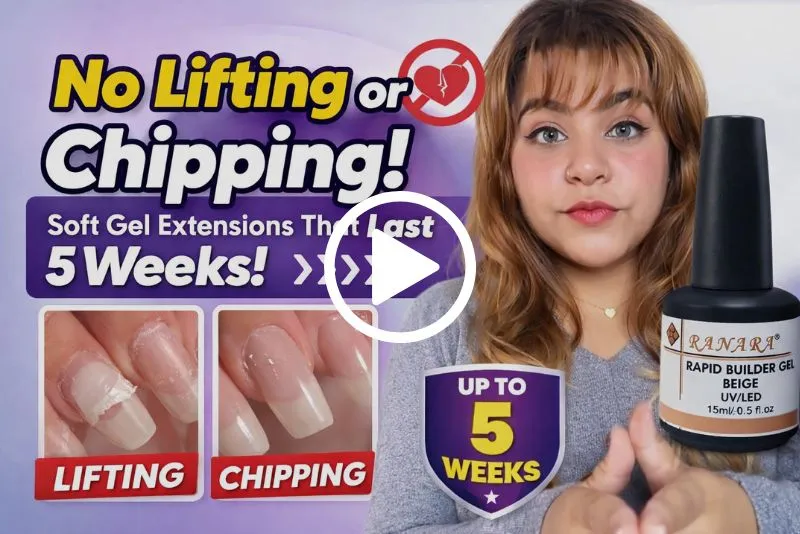
Instagram Video Tip
Builder Gel vs Gel Nail Glue: Full Comparison
Purpose
- Builder Gel: Strength + structure + overlay/extension support
- Gel Nail Glue: Tip bonding + press-on attachment
Consistency
- Builder Gel: Thick, moldable, shaping-friendly
- Gel Nail Glue: Sticky, adhesive-like
Best For
- Builder Gel: Structured manicures, overlays, durability
- Gel Nail Glue: Full cover tips, press-ons, quick tip bonding
Strength Level
- Builder Gel: Stronger for long wear and structure
- Gel Nail Glue: Strong bond but not meant for shaping strength
Lasting Time
- Builder Gel: Usually 2–4 weeks (with correct preparation)
- Gel Nail Glue: Often 1–3 weeks, depends on tip fit + preparation
Which One Should You Choose?
Here’s a simple way to decide based on your nail goal.
Choose Builder Gel If:
- you want stronger natural nails
- your nails break easily
- you want overlays or structured manicures
- you want professional, long-lasting wear
Choose Gel Nail Glue If:
- you wear press-on nails regularly
- you apply full cover tips
- you want fast tip bonding
- you prefer quick DIY nail extensions
If you want strong bonding + long-lasting structure in one product, choose Ranara Rapid Builder Gel (custom BIAB).
Best Option for Strong Bond + Strong Structure
If you want a solution that offers bond-like adhesion plus long structure hold, rapid builder gel is the stronger option.
That’s why Ranara Rapid Builder Gel (custom BIAB) is recommended for nail users who want:
- long-lasting retention
- strong adhesion
- salon-level strength
- smooth, fast application
How to Apply Builder Gel / Rapid Builder Gel (Step-by-Step)
Follow these steps for long wear and minimal lifting.
Step 1: Nail Preparation
- push back and clean cuticles
- shape the nails
- buff lightly
- remove dust properly
- apply dehydrator + primer
Preparation is the #1 factor in retention.
Step 2: Apply Base Coat
Apply a thin base coat and cure under a UV/LED lamp.
Step 3: Apply Builder Gel
- apply a thin slip layer
- add more gel in the center
- build a proper apex
- cure fully
Step 4: Shape + Finish
- file and refine shape if needed
- apply top coat
- cure again
- wipe tacky layer (only if required)
Pro Tip: Avoid flooding the cuticle area. That’s a common cause of lifting.
Common Mistakes And How to Fix Them
Mistake 1: Nails Lifting in a Few Days
Causes:
- poor preparation
- product touching cuticles
- curing not complete
Fix: focus on preparation + apply carefully + cure correctly.
Mistake 2: Cracking or Breaking
Causes:
- builder gel too thin
- no apex support
Fix: build proper structure and keep strength in the stress area.
FAQs: Builder Gel vs Gel Nail Glue
1) Is builder gel stronger than gel nail glue?
Yes. Builder gel is stronger for structure and overlays, while gel nail glue is mainly designed for bonding tips or press-ons.
2) Can builder gel be used to attach tips?
In some cases yes, but it depends on the technique and tip type. Many nail techs prefer rapid builder gel for better hold and structure.
3) What lasts longer: builder gel or gel nail glue?
Builder gel usually lasts longer because it’s designed to provide structure and long-term durability.
4) Can beginners use builder gel?
Yes. BIAB-style builder gel is beginner-friendly, but preparation and proper curing are required for good results.
5) Do I need a UV/LED lamp for builder gel?
Yes. Builder gel needs UV/LED curing to harden and stay durable.
6) Is rapid builder gel better than regular builder gel?
Rapid builder gel self-levels faster and saves time, making it easier for quick, clean application—especially for salon or home users.
Final Verdict: Builder Gel or Gel Nail Glue?
If you want strong nails, overlays, and long wear, choose builder gel.
If you want quick tip bonding for press-ons, gel nail glue is the common choice.
But if you want a stronger, professional-level solution that delivers adhesion + structure together, rapid builder gel is the better option. For long-lasting nail strength and retention, explore Ranara Rapid Builder Gel and upgrade your nail sets today.