
Quick Answer
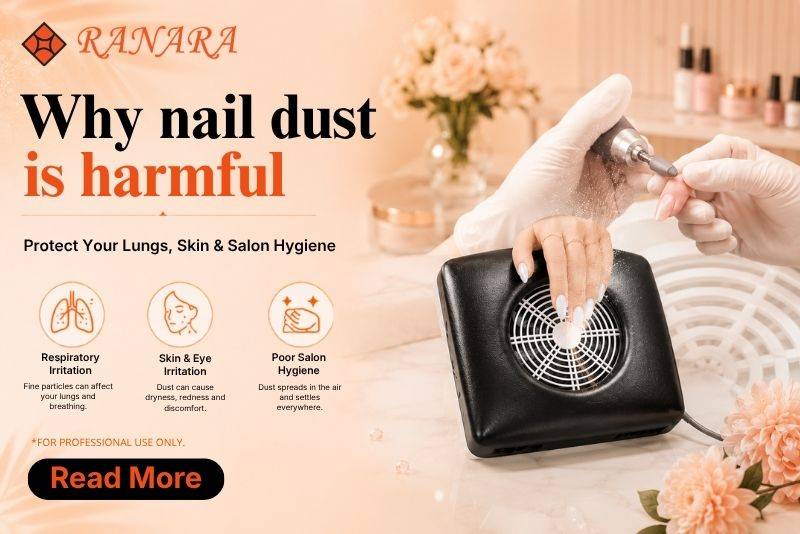
Nail dust may look harmless, but fine particles from acrylics, gels, and natural nails can affect air quality, irritate the lungs, and settle across your workspace. For nail technicians exposed daily, long-term dust exposure can become a serious hygiene and health concern.
The good news? The most effective way to control nail dust is by capturing it at the source using a nail dust collector.
Best Way to Control Nail Dust: Use a Nail Dust Collector
If you regularly file, buff, or use a nail drill machine, a nail dust collector should be one of the most important tools at your workstation.
Unlike room ventilation or desk fans that only move dust around, a dust collector pulls in fine particles the moment they are created. This prevents dust from becoming airborne and reduces how much both technicians and clients breathe in during a service.
Why Dust Collectors Matter
- Capture dust directly during filing or drilling
- Reduce airborne particles before they spread
- Keep the workstation cleaner
- Improve overall salon hygiene
- Minimize cleanup between appointments
For busy salons and home nail artists alike, source-capture dust extraction is one of the simplest ways to maintain a safer environment.
How to Reduce Nail Dust While Doing Nails
While a dust collector is the most effective solution, combining it with good hygiene practices provides the best protection.
Step 01: Use a Dust Collector at the Source
This is the single most important step. Generic room ventilation moves air around, but it doesn’t trap fine dust particles. A dedicated dust collector for nail stations pulls dust away the moment it’s created during filing, buffing, or drilling, preventing it from settling into the air or on your workstation.
The Ranara Dust Collector 40W is built specifically for this purpose. Its powerful 40W motor captures dust as you work, while the disposable dust bag system makes cleanup fast and convenient between clients. Its compact design fits easily on nail stations without occupying too much workspace, making it suitable for both salons and home nail setups.
Step 02: Wear a Properly Rated Mask
A standard surgical or cloth mask is not designed to filter fine dust particles effectively. For extended filing sessions, choose an N95 or equivalent mask for an additional layer of protection alongside source dust extraction.
Step 03: Control Your Filing Technique
Lighter, controlled passes with a file or drill generate less airborne dust than aggressive, fast strokes. Proper technique improves precision while minimizing dust spread.
Step 04: Clean Surfaces Between Every Client
Dust settling on tables, lamps, and tools doesn’t disappear. It can easily become airborne again during the next service. Wipe down nearby surfaces after every appointment to maintain hygiene.
Step 05: Maintain Dust Collector Filters
A dust collector performs only as well as its filters. When filters or dust bags become clogged, suction efficiency drops significantly. Check filters regularly and clean or replace them as needed to maintain optimal performance.
What Exactly Is Nail Dust?
Nail dust is the fine powder produced when filing, buffing, or drilling nails. It commonly contains:
- Keratin from natural nails
- Acrylic polymer dust
- Gel residue from removal
- Pigments and bonding agents
Because many of these particles are extremely fine, they can remain suspended in the air long after filing ends.
Why Nail Dust Is Harmful
1. Respiratory Irritation
Fine acrylic and gel dust can bypass the nose’s natural filtration and reach deeper into the respiratory system. Long-term exposure may contribute to coughing, throat irritation, and breathing discomfort.
2. Skin and Eye Irritation
Dust settling on skin may cause dryness or irritation. It can also irritate the eyes during long working hours.
3. Long-Term Occupational Exposure
Clients are exposed briefly, but technicians may work 8+ hours daily. Continuous exposure over months or years creates greater health concerns.
4. Poor Salon Hygiene
Dust does not stay at one nail station. It spreads through airflow, settles on shared surfaces, and affects overall salon cleanliness.
Where Nail Dust Is Commonly Produced
Acrylic Filing
Produces heavy, dense dust due to harder material.
Gel Polish Removal
E-filing hard gel or gel-X creates significant fine dust.
Nail Drill Machine Use
Fast material removal means higher dust generation.
Hand Filing Natural Nails
Produces less dust but still contributes to airborne particles.
Ranara Dust Collector 40W – A Practical Dust Control Solution
Ranara Dust Collector 40W is designed to capture dust directly during nail services.
Its 40W suction system helps pull in dust while filing, buffing, or drilling, reducing the amount of dust settling on your desk, tools, and hands.
Key Benefits
- Strong suction for daily salon use
- Compact workstation-friendly design
- Easy cleanup with disposable dust bag system
- Suitable for salons and home users
It helps maintain cleaner air, cleaner workstations, and a more professional nail service environment.
The Bottom Line
Nail dust may seem minor, but repeated exposure can affect air quality, hygiene, and long-term comfort for nail professionals.
The best protection starts with a nail dust collector, supported by proper masks, good technique, and regular cleaning. Taking these simple steps can make a noticeable difference in keeping your salon safer and cleaner.