
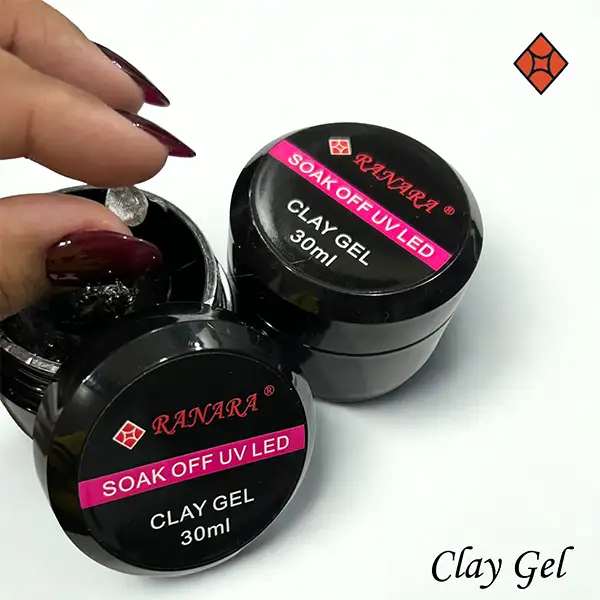
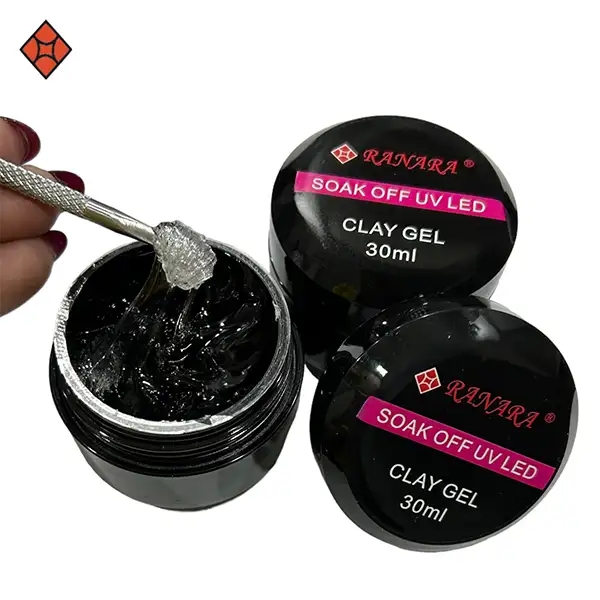
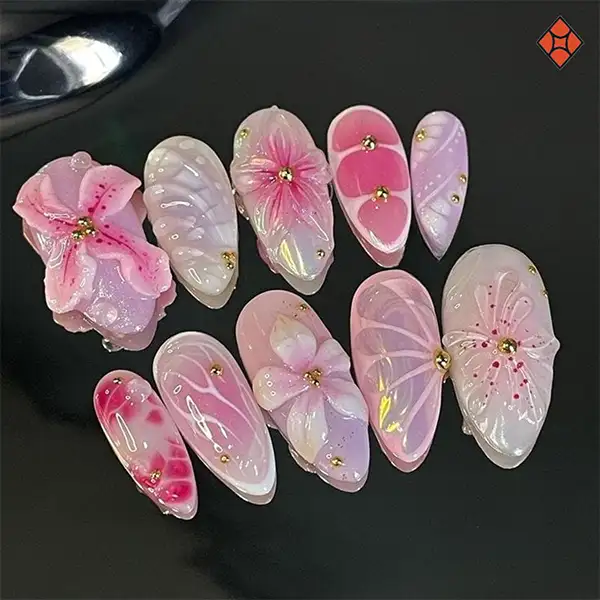
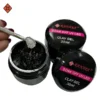
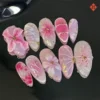
Clay Gel for Nails is a versatile product in the nail industry, often described as a hybrid between builder gel and traditional nail art mediums like acrylics or 3D gels. It has a thick, moldable consistency that allows for intricate and elevated nail designs, including extensions and 3D textures. Here’s a detailed explanation of its features and uses:
1. Texture and Consistency
Clay gel is thicker than regular builder gel but more pliable than acrylic. Its texture is similar to clay, allowing it to hold its shape during application. This makes it ideal for 3D art and sculpting. Unlike thinner gels, it doesn’t run or self-level, giving you control over complex designs.
2. Versatile Applications
• Nail Extensions: Due to its strength and thickness, clay gel can be used to build nail extensions. It forms a sturdy base that can be shaped and cured into the desired length and style.
• 3D Sculpting: Clay gel is commonly used for 3D nail art, such as flowers, bows, leaves, or intricate geometric shapes. You can create elevated designs that hold their shape and dimension even after curing.
• Textured Designs: Its pliability allows for the creation of textured surfaces like raised patterns, swirls, and effects like knitted textures or lace. It stays in place until cured, enabling the artist to take time with detailed designs.
3. Strong Builder Gel
Despite being used for artistic purposes, clay gel also functions as a strong builder gel. It adds strength to nails, similar to traditional builder gels, making it suitable for clients who need durable, long-lasting manicures. This strength also makes it a great choice for people with weak or brittle nails who need extra reinforcement.
4. Cure Time
Clay gel typically cures under a UV or LED lamp, though the cure time might be slightly longer due to its thickness. It may need 60 to 90 seconds in an LED lamp or 2 to 3 minutes in a UV lamp, depending on the depth of the design.
5. Workability
• Shaping: Since it doesn’t dry until cured, you have ample time to mold and shape it to your liking. This feature is particularly useful when working on intricate 3D nail designs.
• Sanding & Filing: After curing, clay gel can be buffed and filed like traditional builder gel. You can refine the surface for smoother designs or blend it into the rest of the nail.
6. Combination with Other Products
Clay gel can be combined with other nail art products such as:
• Pigments and Glitter: Mix with pigments or glitter for customized colors or effects.
• Gel Paints or Polishes: After curing and buffing, you can paint over clay gel designs with gel paints, polishes, or apply a top coat for a glossy finish.
7. Benefits
• Long-Lasting: Designs made with clay gel are durable and resistant to chipping or breaking.
• Moldable: Perfect for creating custom designs and shapes that wouldn’t be possible with thinner gels.
• Strength: Adds structure and strength to nails, making it useful for both artistic and structural purposes.
How to Use Clay Gel
1. Prep the Nail: File, buff, and clean the nail as usual. Apply a base coat and cure.
2. Sculpting: Use a small amount of clay gel to sculpt your design using tools like dotting tools, brushes, or silicone sculpting tools.
3. Curing: Once the design is in place, cure it under a UV/LED lamp.
4. Finishing: Buff the design, if needed, and apply top coat or color to finish.
Clay gel offers a unique combination of art and strength, making it a go-to product for nail artists who want to explore more complex designs without sacrificing the durability of the nails.

Reviews
There are no reviews yet.